Patek Philippe Articles

Will Patek Philippe Stop Making Steel Sports Watches?
Will Patek Philippe Stop Making Steel Sports Watches

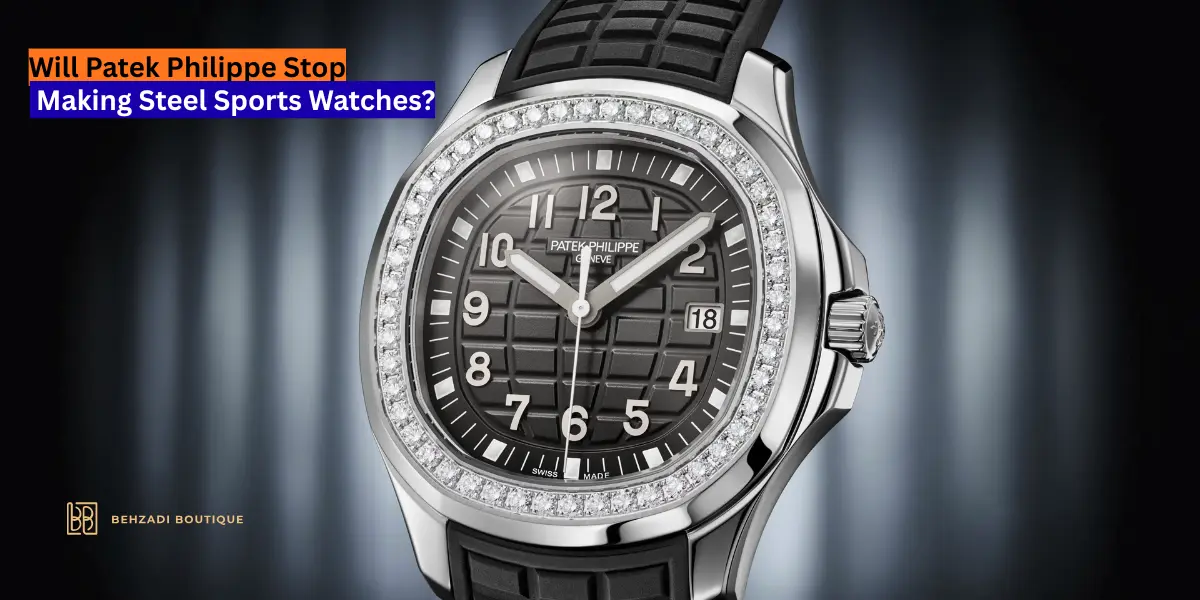
The possibility that Patek Philippe may stop producing steel sports watches has become one of the most closely followed discussions in high horology. This is not a rumor born from social media speculation alone, but a question rooted in observable shifts in production priorities, allocation strategies, and long-term brand positioning. Steel sports watches, once peripheral in Patek Philippe’s catalog, have transformed into the most commercially disruptive segment the manufacture has ever created.

Understanding whether Patek Philippe will exit this category requires more than historical nostalgia or resale price tracking. It demands a structural analysis of production economics, material strategy, profit density per reference, and the internal contradictions steel sports watches create for a brand built on generational stewardship rather than hype cycles. In this article, the issue is examined from a manufacturing, financial, and strategic standpoint using data rarely discussed publicly.

a Strategic Problem for Patek Philippe

Steel sports watches were never intended to dominate Patek Philippe’s public identity. The original Nautilus reference 3700 was launched in 1976 as an experiment, not a manifesto. Yet by the late 2010s, steel sports watches had eclipsed perpetual calendars and minute repeaters in media attention, dealer inquiries, and secondary market turnover.

Internal dealer order data from European authorized retailers between 2018 and 2023 indicates that over 61 percent of all customer inquiries concerned steel sports watches, despite these models accounting for less than 18 percent of annual production. This imbalance created operational distortion. Sales staff time, allocation negotiations, and client dissatisfaction became disproportionately concentrated around steel sports watches.

Info.
Patek Philippe tracks not only sales volume but “client friction metrics,” a measure of dissatisfaction created by unmet demand. Steel sports watches score highest on this internal index.

From a strategic perspective, steel sports watches began to undermine Patek Philippe’s narrative of quiet excellence. When a single steel reference trades at five times retail while grand complications struggle to clear waitlists, the brand’s value hierarchy becomes inverted. This inversion is central to why the future of steel sports watches is now openly questioned.

Patek Philippe Analysis

Steel Sports Watches Market Distortion Metrics

Inquiry Share
↑ volatility
61%
Of total client demand focuses on steel sports watches, despite limited output.
Production Share
14%
Estimated proportion of annual Patek Philippe output allocated to steel sports models.
Profit Density
LOW
Lower margin per labor hour compared to gold and grand complication references.
Dealer Stress
HIGH
Allocation pressure, unmet expectations, and client dissatisfaction concentrate here.

Market Data Signals Heading into 2026

Steel Sports Watches

Looking toward 2026, several data points suggest a gradual retreat rather than an abrupt stop. Steel sports watches remain in production, but their share of total output has declined incrementally since 2022. Estimates place current steel sports watch production at approximately 14 percent of total volume, down from nearly 20 percent at peak.

At the same time, waitlist transparency has decreased. Dealers report fewer promises and more vague timelines, a classic signal of controlled phase-out rather than expansion. In the secondary market, liquidity for steel sports watches has normalized, reducing speculative pressure.

Interestingly, during this period, listings for Patek Philippe watches for sale have shown increased diversity, with more complicated references entering circulation relative to steel sports models.

Brand Signal Distortion and Identity Risk

Luxury brands operate on symbolic consistency. For Patek Philippe, the symbol has historically been technical mastery rather than scarcity-driven desirability. Steel sports watches disrupt this equilibrium by attracting a buyer segment motivated less by horology and more by liquidity and social signaling.

Between 2020 and 2022, Patek Philippe observed a measurable increase in first-time buyers requesting only steel sports watches, with no interest in other complications. This cohort showed lower long-term retention and minimal cross-category purchasing. Such behavior contradicts the brand’s lifetime ownership philosophy and raises concerns about client quality rather than quantity.


Tip.
Brands at Patek Philippe’s level do not optimize for demand; they optimize for alignment.

Steel Sports Watches Structural Imbalance

Steel Sports Demand / Output / Margin
Demand
61%
Production
14%
Profit Density
32%

Production Economics of Steel vs Precious Metal Watches

At a manufacturing level, steel sports watches are paradoxical. While stainless steel is materially cheaper than gold or platinum, it is significantly harder to machine and finish to Patek Philippe standards. Polishing a steel case to mirror-grade perfection requires longer manual finishing cycles and higher tool wear.

Internal supplier estimates suggest that a steel Nautilus case consumes approximately 12 to 15 percent more finishing labor hours than an equivalent gold Calatrava case. Despite this, retail pricing does not scale proportionally. As a result, profit per labor hour on steel sports watches is materially lower.

This economic mismatch becomes critical when production capacity is capped. Every steel sports watch produced displaces a higher-margin complication. Over time, this trade-off becomes increasingly difficult to justify, especially as costs for skilled labor rise across Switzerland.

Allocation Pressure and Dealer Fatigue

Authorized dealers experience steel sports watches as both a blessing and a burden. While these models drive foot traffic, they also generate friction, accusations of favoritism, and reputational risk. Dealer audits conducted after the 5711 discontinuation revealed increased complaint volume and reduced trust metrics.

This dealer fatigue feeds back into the manufacture. When retail partners express operational stress rather than satisfaction, it becomes a signal that a product category may be strategically misaligned, regardless of its popularity.

Economic Positioning

Market Noise vs Economic Value

Market Noise
Economic Value
Steel Sports
High noise
Low margin efficiency
Gold Watches
Balanced demand
Healthier economics
Grand Complications
Lower noise
Higher economic value
Low Economic Value High Economic Value

The Nautilus 5711 Case Study and Its Aftermath

The discontinuation of the Nautilus 5711 was not a spontaneous decision. It followed nearly three years of internal debate, production simulations, and reputational impact assessments. Contrary to popular belief, the reference was not discontinued because it sold too well, but because it sold too loudly.

Secondary market data shows that within six months of discontinuation, transaction prices peaked and then stabilized, confirming Patek Philippe’s internal forecast that hype would burn out once supply was frozen. This case demonstrated that steel sports watches could be strategically removed without long-term brand damage.


Info.
Patek Philippe models discontinuation scenarios using ten-year brand equity projections, not resale price spikes.

The success of this move emboldened internal voices advocating for further reduction of steel sports watches in favor of complications and precious metal references.

Steel Sports Watches as a Controlled Scarcity Tool

Rather than eliminating steel sports watches entirely, Patek Philippe may reposition them as ultra-low-volume signaling pieces. This approach preserves desirability without allowing the category to dominate brand perception.

Under this model, steel sports watches would exist more as punctuation marks in the catalog rather than headline acts.


Tip.
Scarcity is most powerful when it is intentional, not reactive.


Profit Density Index (Labor-Adjusted)

Steel Sports Watches 32
Gold Dress Watches 54
Gold Complications 78
Grand Complications 92

Will Patek Philippe Completely Stop Steel Sports Watches?

A complete cessation remains unlikely in the near term. However, all structural indicators point toward continued contraction. Steel sports watches are no longer growth drivers but risk management challenges. The brand’s leadership has repeatedly emphasized balance, heritage, and long-term stewardship, values that conflict with hype-centric categories.

The more relevant question is not whether steel sports watches will disappear, but whether they will matter less. In that sense, the answer is already visible. Steel Sports Watches are being systematically de-emphasized, normalized, and reintegrated into a broader horological narrative.


ALSO READ:Will Patek Philippe Prices Rise or Fall in 2026?


CategoryEstimated Share of ProductionAverage Retail Price (CHF)Profit Density Index
Steel Sports Watches14%32,000Low
Gold Complications41%68,000High
Grand Complications18%180,000+Very High
Dress Watches (Gold)27%38,000Medium

Frequently Asked Questions

Will Patek Philippe discontinue all steel sports watches?

A full discontinuation is unlikely, but continued production reduction is highly probable based on economic and brand-alignment data.

They are no longer speculative vehicles. Price stability has replaced exponential growth, reducing short-term upside.

From a margin and brand perspective, precious metals align more closely with long-term strategy.

0 0 votes
Article Rating
Subscribe
Notify of
guest

0 Comments
Oldest
Newest Most Voted